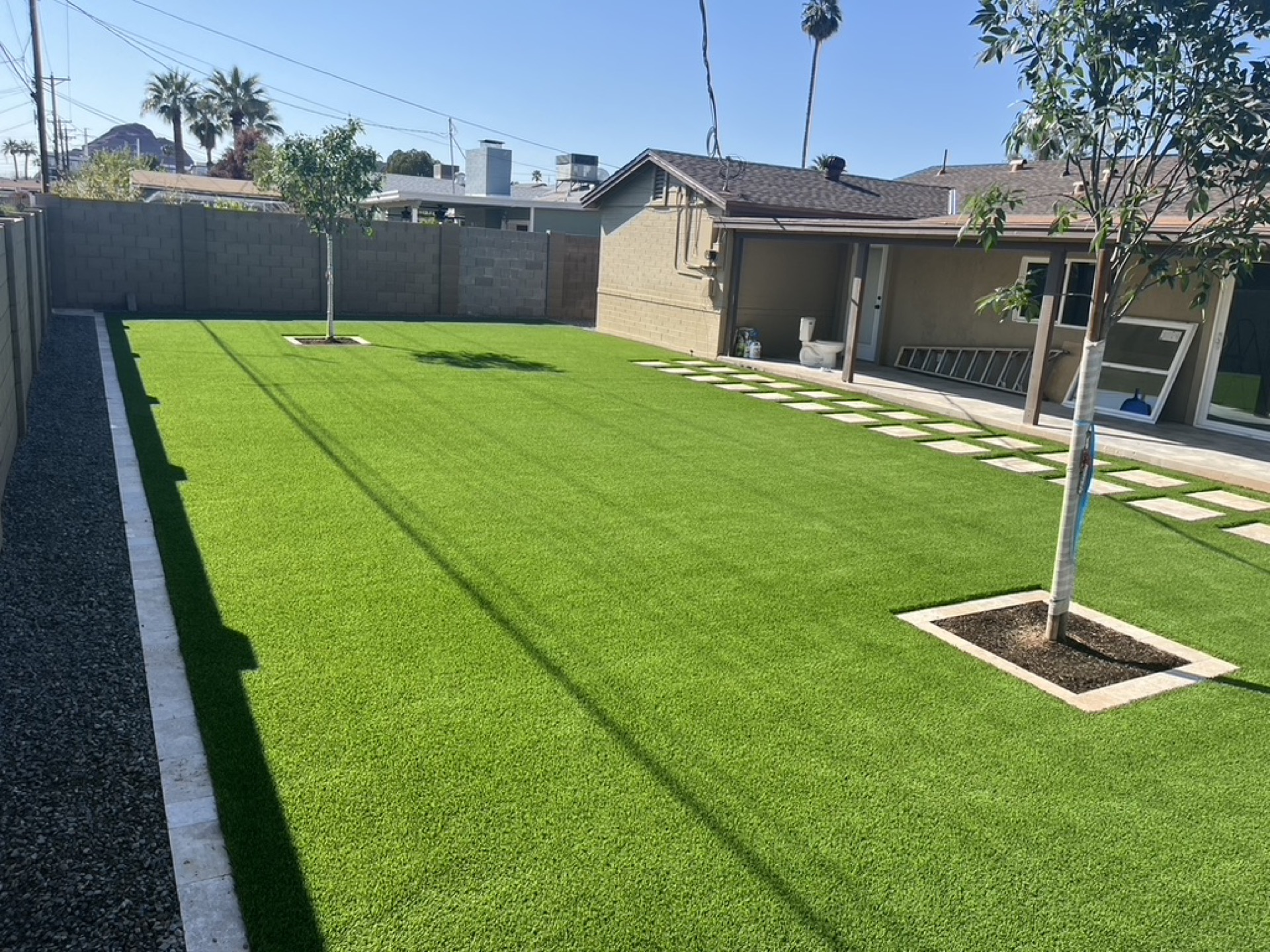
This is the most honest comparison I can give you — written by someone who installs artificial turf for a living, but who will tell you when natural grass is the right choice for your situation.
Arizona presents a unique set of conditions that make this comparison different from what you'd read for, say, a Seattle homeowner. Water scarcity, extreme heat, UV intensity, and a dual-season grass cycle all change the math significantly.
Side-by-Side Comparison
| Category | Artificial Turf | Natural Grass |
|---|---|---|
| Upfront Cost | $12–$22/sq ft installed | $1–$4/sq ft installed (sod) |
| Annual Water Use (1,000 sq ft) | ~0 gallons | 50,000–80,000 gallons |
| Annual Maintenance Cost | $100–$300/year | $800–$2,500/year |
| Summer Performance | Hot in direct sun; manageable with shade + rinse | Cool to touch; natural evapotranspiration |
| Winter Performance | Stays green year-round | Bermuda goes dormant (brown); requires overseeding |
| Drought Performance | Unaffected | Suffers without irrigation |
| Durability (high traffic) | Excellent with quality product | Worn paths and dead spots develop quickly |
| Pet & Dog Use | No urine burns; odor-control infill available | Urine burns; mud; dead spots from digging |
| Lifespan | 15–25 years | Indefinite but requires constant care |
| Environmental (water) | Saves 50,000–80,000 gal/year | High water consumption in desert climate |
| Environmental (materials) | Plastic polymer; eventual landfill | Biodegradable; supports insects and soil |
| Allergens | No pollen; hypoallergenic | Seasonal pollen; grass mold spores |
| Curb Appeal | Permanently green; no brown patches | Cyclical — great in growing season, poor when dormant |
Water: The Arizona Deciding Factor
In most climates, water use is a secondary consideration in the turf-vs-grass debate. In Arizona, it's primary. The Colorado River crisis is real, Phoenix water rates are rising steadily, and many communities now restrict landscape irrigation days and times.
A 1,000 sq ft natural grass lawn in Phoenix requires approximately 55,000–75,000 gallons of water annually. At current Phoenix water rates, that's roughly $350–$600/year in water alone. Over 15 years, you've spent $5,250–$9,000 watering a 1,000 sq ft patch of lawn — before accounting for rate increases.
Artificial turf requires zero irrigation. That 15-year water savings alone covers a significant portion of the installation cost.
The Heat Question — Who Wins?
I'll be honest here: natural grass wins on heat performance in summer.
Natural grass cools itself through evapotranspiration and stays near ambient air temperature even in direct Phoenix sun. Artificial turf absorbs and radiates heat — surface temperatures can reach 140–160°F in direct afternoon sun during July.
However, this needs context:
- Most Scottsdale homeowners don't use their backyard at 3pm in July anyway
- Shade structures, trees, and shade sails dramatically reduce turf surface temps
- Rinsing turf with a hose drops surface temperature to comfortable levels within minutes
- New heat-mitigating infill products (FieldTurf ThermaBlock, etc.) reduce temps by 15–20°F
For families with young children who play outside daily in summer, heat management is a real consideration. We discuss shade coverage on every residential turf install for this reason.
Winter: Turf Wins Convincingly
Arizona's Bermuda grass goes dormant and brown from roughly October through April. Most Scottsdale homeowners overseed with ryegrass every fall — adding $400–$900/year in seed, fertilizer, and labor — to maintain a green lawn through winter.
Artificial turf is green every single day of the year. For homeowners who spend significant time in their backyard October through May — which is peak outdoor living season in the Valley — this matters enormously.
Who Should Choose Artificial Turf
- Homeowners with dogs who destroy natural grass
- Homeowners focused on water savings and sustainability
- Anyone who travels frequently (can't maintain an irrigation schedule)
- Households with grass allergy sufferers
- Anyone tired of the Bermuda/ryegrass seasonal cycle
- Properties with poor soil, caliche, or drainage challenges
Who Should Keep Natural Grass
- Families with children who play barefoot in July summer heat (prioritize shade coverage)
- Homeowners who genuinely enjoy lawn care as a hobby
- Properties with established, mature Bermuda that's thriving in well-irrigated soil
- Those who prioritize a fully natural, chemical-free outdoor environment
Our Honest Verdict for Arizona
For the vast majority of Phoenix and Scottsdale homeowners, artificial turf is the better long-term choice — driven primarily by water savings, maintenance reduction, and Arizona's dormant grass season. The heat concern is real but manageable. If you have dogs, there's really no comparison. If summer barefoot play is a priority, add shade coverage — it improves turf and makes the whole yard more comfortable anyway.